

CNN
–
Anthony Bourdain loves haggis. But even the late, famous American chef, writer and television host recognized that the “sinful parts of the mystery and half-invention.
“Don’t tell them to tell you otherwise, that’s one of life’s great pleasures,” Bourdain said during one of his gastro-curious journeys in the glassmow. “There is no more unfairly modified food on earth than haggis.”
A mash-up of diced lungs, liver and heart mixed with Oatmeal, Beef Suet, Sibus spices made with raw lambs in a way that is not good.
Instagrammable Isn’t that the word that immediately comes to mind. In the world of the 21st century, where the “clean” food and processing of Pap overis as an “Outlander” -STire “-STLEASE FOR ANOTHER YEAR.
However, in some alchemy, once cooked to the necessary “hot reekin’ (steaming)” state, it is more than the sum of its modest parts. It’s the Offaly charm that has carried the nana-to-tail living in a younger generation of Scots who have mostly turned their backs on the Trips, liver and kidney that their predecessors enjoyed (or survived).
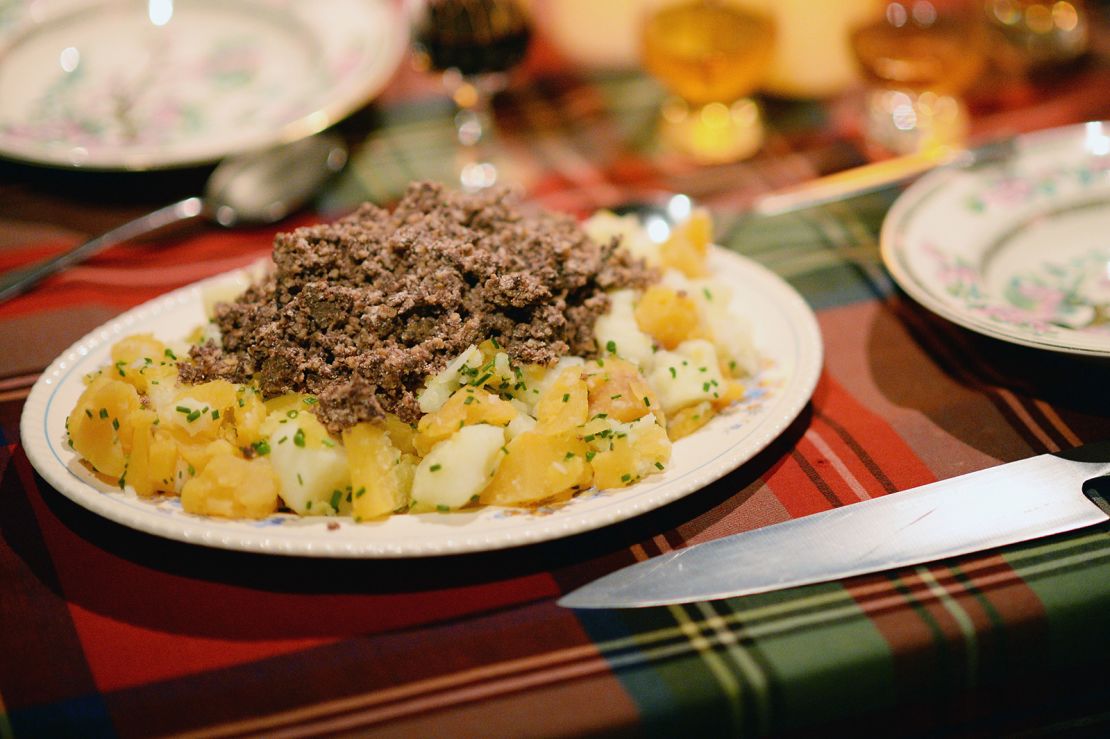
Carefully prepared, haggis tastes oaty and meaty; dark and gloomy, a little crispy on the edges but still moist; earthy but also savory and spicy; deep tasting and deeply warming, the perfect foil for the traditional garnish of floury mashed potatoes and orange bashed turn.
“It’s like a cuddle for the stomach,” said Nicola Turner, a 35-year-old office manager from Helensburgh, a town in western Scotland on the Clyde.
Spice and texture
For children of the 1960s and ’70s, like Ian Rankin’s crime novel, Haggis meals and his quint-shop Scottish Decuscive Character, Inspector John Regus.
Today many treatments are blooming.
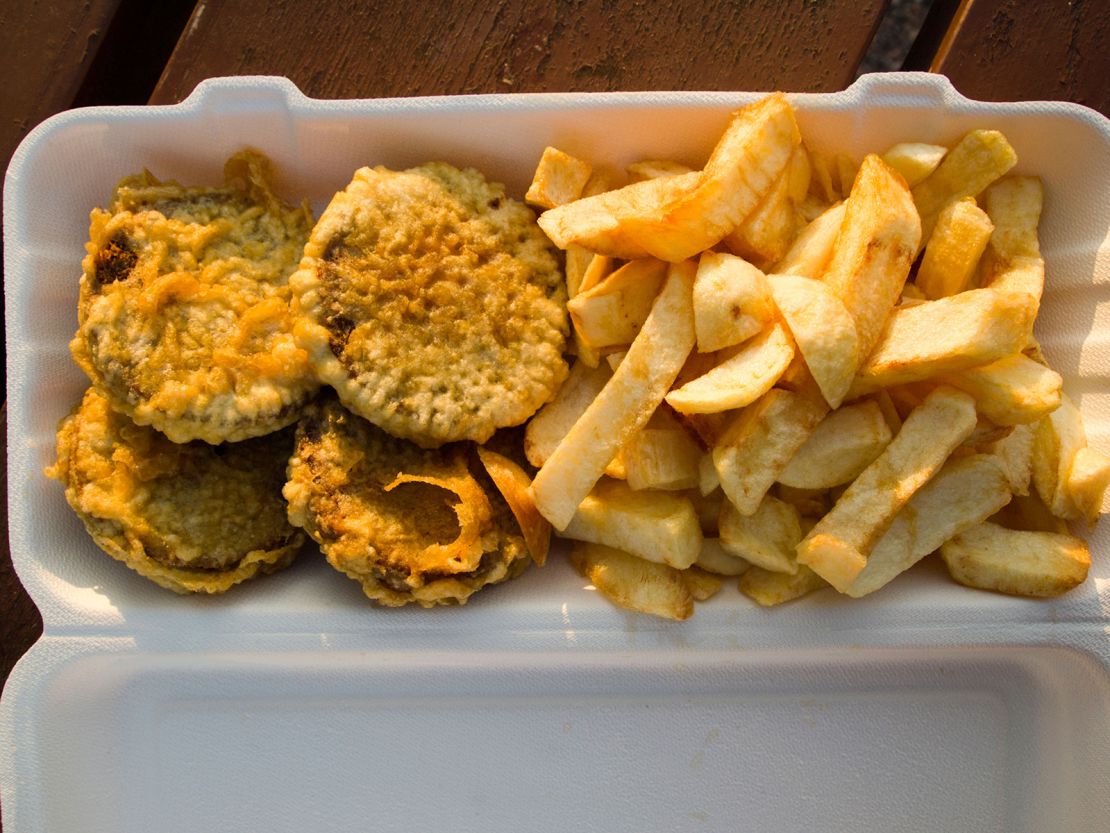
“I’m sure the first time I went to EDinburgh we had haggis in Filo Pastry with a style of jam – maybe the ranking. “He’s a big fan of haggis and chip shops. Rebus enjoys the occasional meal of Haggis from his local chip shop. He’s definitely a fan, as I am.”
“It’s all about spicing and texture,” says Scottish food writer, Cookist and Cook Sue Lawrence, a champion of haggis adaptations. “If you don’t know what’s in it, you don’t think ‘Oh that tastes like liver or whatever.’ It’s all finely chopped and the oatmeal gives it a nice texture. It easily becomes a good, big mince dish. ”
Lawrence uses Haggis as an alternative to beef and pork Ragù in Lasagna and in his Pasilyang, a North African creation of Alaf or seafood filling. The surface of Filo Pastry mixed with Spice Blend Ras El Hankout, Apricots, Chile Zest and almonds before being sprinkled with cinnamon and incing sugar.
Such costural crossovers serve as a reminder that a dish can easily become a dish without a scottish cause. Records of both quick and portable preparations of quick-killing sheep and other animals go back to ancient Rome and Greece.
Haggis combinations with offal and grains are part of the culinary history of many countries. Spain has Chireta, Romania Drob and Sweden Polsa, while Chaudin, or Ponce, is a riced pork belly that is a staple of cajun cooking.
In neighboring England, recipes for “Hagese,” “Hagges” or “Haggast” were published in the 15th and 17th centuries, which may be the first written records north of the border.
Etymological evidence points to the term “Haggis” having its roots in Old Norse, perhaps arriving in an early version in Britain and Ireland in a Viking descent.
But since the poet Robert was first appreciated in the late 1700s, backris backsytory has been monopolized by Scotland and the Scots, sometimes wrongly.
This, according to the kind of lore that burns, is the dish that a highlander dough will take with him while running the markets of gicokes of gicokes of gicokes of gicokes of gicokes of gicals of smogs in his bad trade by his encouraged trade by the light of the moon.
From such romantic words it is a short step to abandon the Haggis in a wee wild wildie, one with longer legs on the one hand that is doomed to run. In 2003, a poll of American tourists in Scotland found that one in three of them believed they could withstand such a confused creature on a Caledonian holiday.
Bourdain, a native New Yorker, may qualify as Haggis’ Biggest Admirer since the fires, but his colleagues at the US Department of Agricultural Spacks. Haggis imports into the United States were banned in 1971 as part of a ban on the consumption of all livestock lungs. Authentic versions of the old haggis remain culinary contraband in the US, as hard to get your hands on as cigars in Cuba.
Around the world, it’s a different story. According to lead producer Simon Howie, Haggis is more appreciated and consumed today than the well-known acquaintances.

Strongly tongue-in-cheek, the poem praises the “Great Chieftain O’ the Pudding Race,” as exactly the kind of bad, happy fare that would nurture a brave warrior nation.
In comparison to the flowing foreign MOC enjoyed by the Cletic-Qazffing Elites of the time – the Olio, Fricassée or rogns “Sickens his readers to those who will refuse the land of Scotland.
As the English translation of the original Scots Word version puts it:
But mark the rustic, haggis-fed /
The trembling earth steadies his tread /
Clapped his many fists on a blade /
He will make this whistle /
And legs and arms and heads will cut off /
Out like heads of thorns

Anthony Bourdain and Anderson Cooper talk to Scottish Food
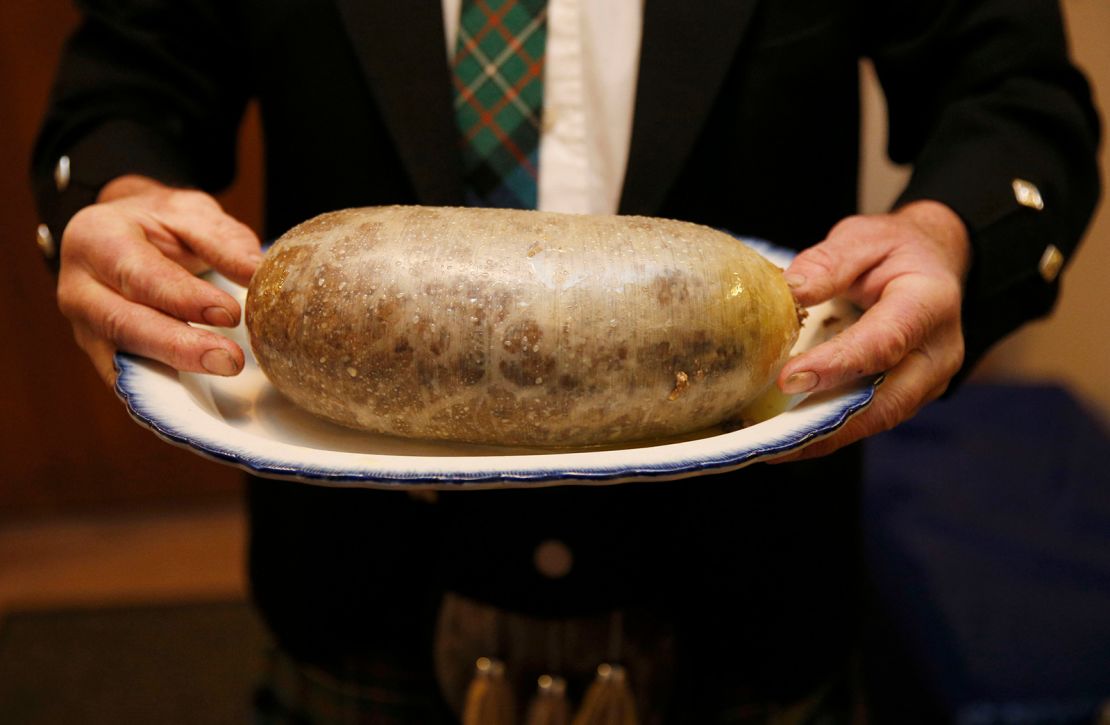
These days synthetic casings have largely replaced the stomach but Ovine and Porcine Innards remain the core of most haggis, accounting for 60% of the nearly two million Haggises each year.
For what it is, its versatility, value for money and convenience explain why this staple of the Scottish Larder is thriving. Usually the sales of Scotland in Scotland, which accounts for half of the global consumption by volume, for about £ 6, or $ 7.70 per kilogram ($ 3.36 / Pound). That’s half the price of less expensive cuts of beef or a third the price of Scotch Lamb while enjoying a similar nutritional profile and calories.
“You can give your kids a meal that’s not full of things you don’t want to feed them – for a few pounds you can feed three strapping lads,” Howie said.
“From a kitchen perspective, it’s very simple because when it leaves our factory it’s already cooked. These cooking owners or a student who doesn’t have a repair method to repair a method to repair a method to repair a method to repair a method to repair a method to repair a method to repair a method to put it on the Plate Piping.”
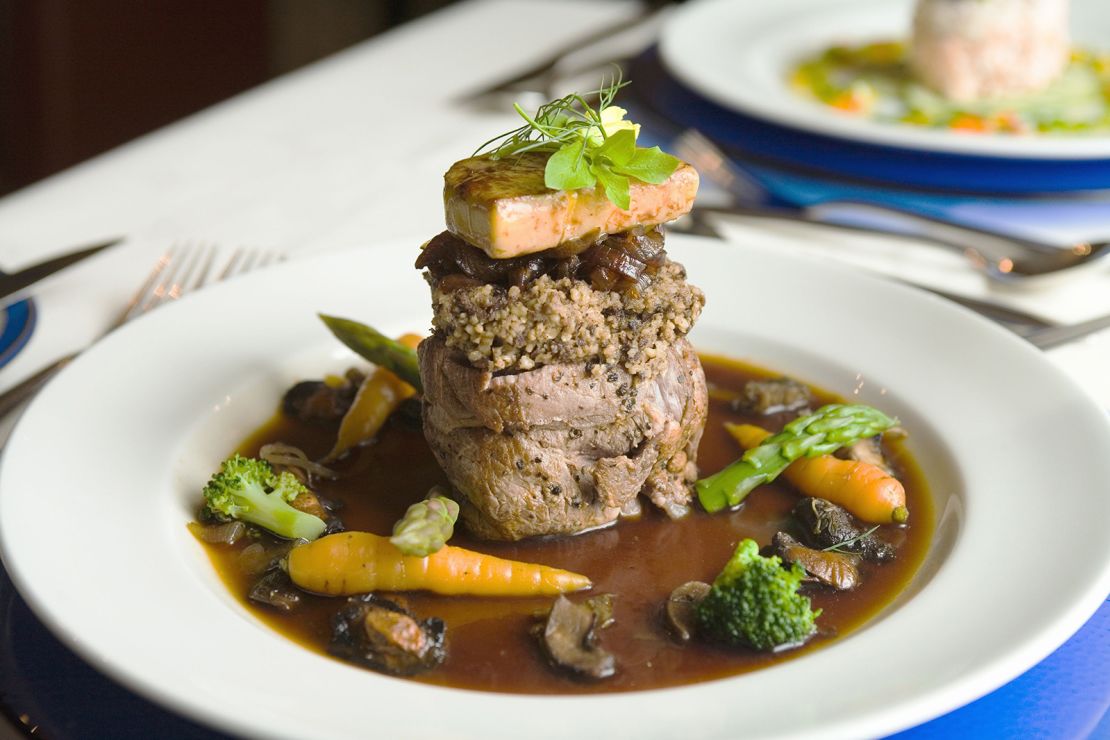
The text The spicy intally vusensity means that it is also found used in canapés and as a crouton-bornon garnish for soups.
Buoyant Sales is also underpinned by the increasing consumption of haggis in forms inspired by Scotland’s ethnic minorities.
Glasgow’s Sikh community pioneered haggis pakora in the 1990s and samosas, spring rolls and quesadillas have followed in its wake, often using a vegetarian version of the protein in which the offal is replaced by a mix of vegetables, pulses and mushrooms.
Such a dish is more than culinary twists. They are badges of belonging, and a sign that, two centuries after the fires were lit for the nation, Haggis is as closely related to Scots Ilotity as ever.
Just ask Ross O’cinneide, a promising 14-year-old fly-half in the junior section of Stirling county rugby club.
“Most of my friends and I like haggis,” he said. “Mum makes it for us sometimes after rugby and it’s a really good warming feeling. And it’s good because it’s Scottish.”